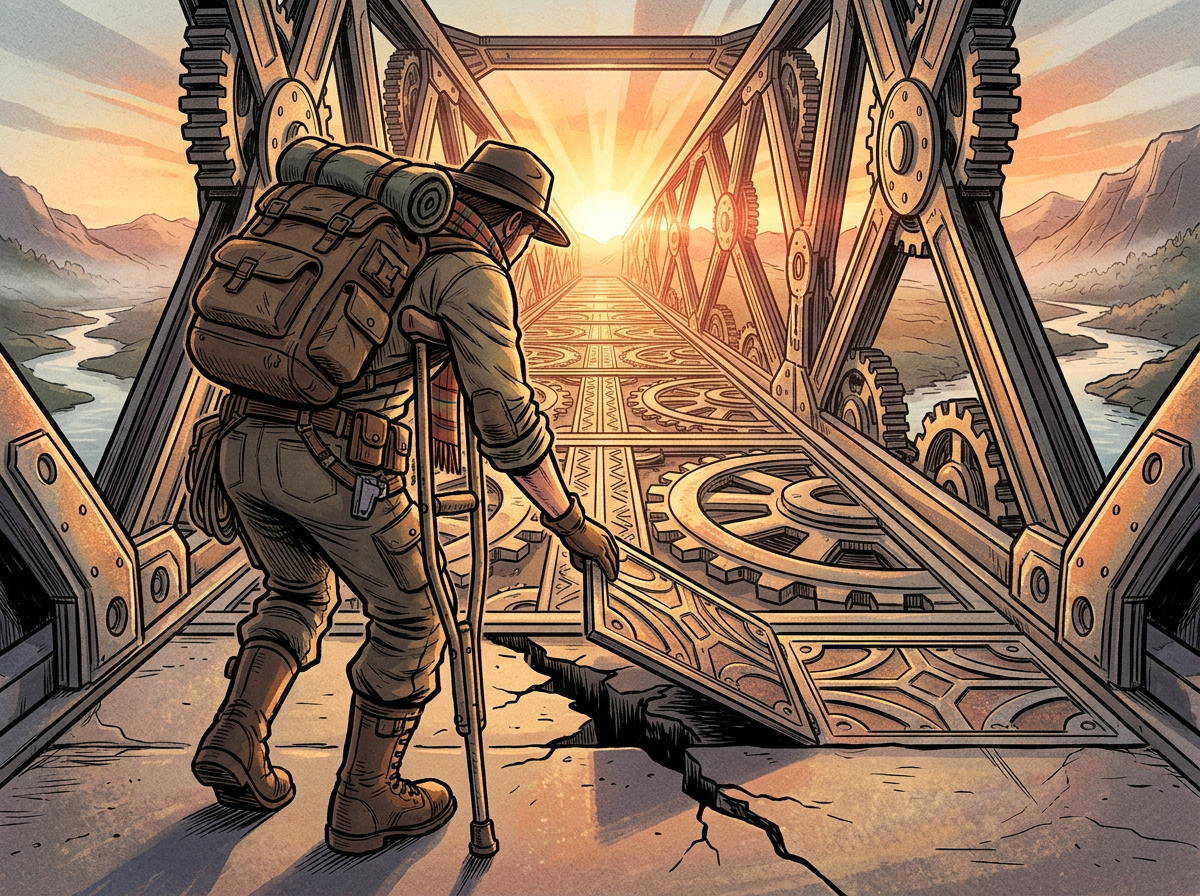
In the first Pirates of the Caribbean, Captain Barbossa says to Jack Sparrow, “the [pirate] code is more what you’d call guidelines than actual rules.”
That’s exactly how I feel about most processes at work—frameworks, rubrics, flowcharts, documentation, and more. While there is a time and a place for process, it is often a red flag that something else may be going on. And we shouldn’t be afraid to bend the “rules” when it suits us.
Why Process is the Participation Trophy of Progress 🏆
It stifles creativity: You have a killer idea, but you need to fill out a detailed form and jump through hoops to share it the “right” way. That idea is likely not going anywhere.
It turns people into robots: Process dictates, and we comply. Predictably churning out the same old, same old.
It’s a breeding ground for mediocrity: When everyone’s following the same paint-by-numbers path, there’s no room for pushing boundaries or exceeding expectations.
It’s the enemy of speed: Time is finite, and we all need more time in our lives. Too many processes unnecessarily slow us down and make it impossible to change priorities quickly and focus on the highest potential impact.
Red Flags, Leadership, And Process
One of the things I learned the hard way as a middle school teacher was that the best way to improve student behavior in the classroom is to deliver quality engaging lessons. It seems simple and obvious, but almost every teacher falls into the trap of spending significant time on ‘classroom management’. Things like optimizing seating charts and implementing routines. All the while, their time might be better spent improving their lesson plans.
I’ve done similar as a parent too. Trying out some color-coded rewards chart and a meticulously mapped-out bedtime routine, all in the effort of shaping behavior.
In both the classroom and the living room, I used process to hide the fact that I wasn’t doing the deep work. In the work world, we do the exact same thing.
More often than not, these strategies result in temporary improvements. But we end up creating a dependence on external rewards instead of fostering intrinsic motivation.
When leaders or teams turn to establishing more process, we should be on the lookout for possible red flags:
🚩 There is a lack of clear vision or decisive action. Process becomes a way of creating an illusion of progress.
🚩 Processes are often micromanagement in disguise. Leaders who feel the need to control every step instead of trusting their team’s expertise and empowering them to solve problems.
🚩 A focus on excessive process may also indicate risk aversion that borders on paralysis. While mitigating risk is an essential aspect of any business, an overemphasis can lead to missed opportunities. Overly complex Quality Assurance measures in software development is a frequent example.
Or it is a combination of all three.
Have Healthy Skepticism
As teams and products scale (or age), more process is inevitable. While process can be a helpful tool, it shouldn’t be a straitjacket. Let’s use it as a guide, not a GPS.
If I start working in an operating room or on a jet engine, I’ll probably believe in process more.

Leave a Reply